Warren Collum (Exhibitions and Collections Manager) asked Andy about the commission.
How did your personal history with Devon contribute to the creation of the artwork, and why was the River Torridge an important focus for the project?
My work for this commission initially began in a virtual world, which might seem unusual to some. However, as a frequent visitor to Devon, my sense of place is deeply rooted in experiences like surfing along the coast, photographing Crow Point for my book in the late 1990s, and working on a project in Westward Ho! for the Millennium Fund in 2000. Recognising this personal history was a great starting point, providing direct reference points, particularly along the coast. The River Torridge, however, was a less familiar subject. After many visits, I discovered areas with relatively easy access, but finding others—especially the source of the river—proved more challenging. This inaccessibility, in a way, fosters the imaginary, which is a key component of this project for me.
Warren: How did the concept of the "imaginary" play a role in the creation of the film, and how does it connect to science fiction?
The imaginary is a key element in science fiction. It explores potential futures and imagines how scientific and technological advancements might shape society, culture, and human experience. This allows me to engage with the complexity of the world. Science fiction acts as a bridge between the present and the future, offering imaginative and critical perspectives on how current trends could evolve. It helps us reflect on our values, consider the ethical implications of change, and envision the possible consequences of our actions today. In this way, science fiction not only entertains but also encourages us to think deeply about the future.
Warren: How was the film Shimmer created?
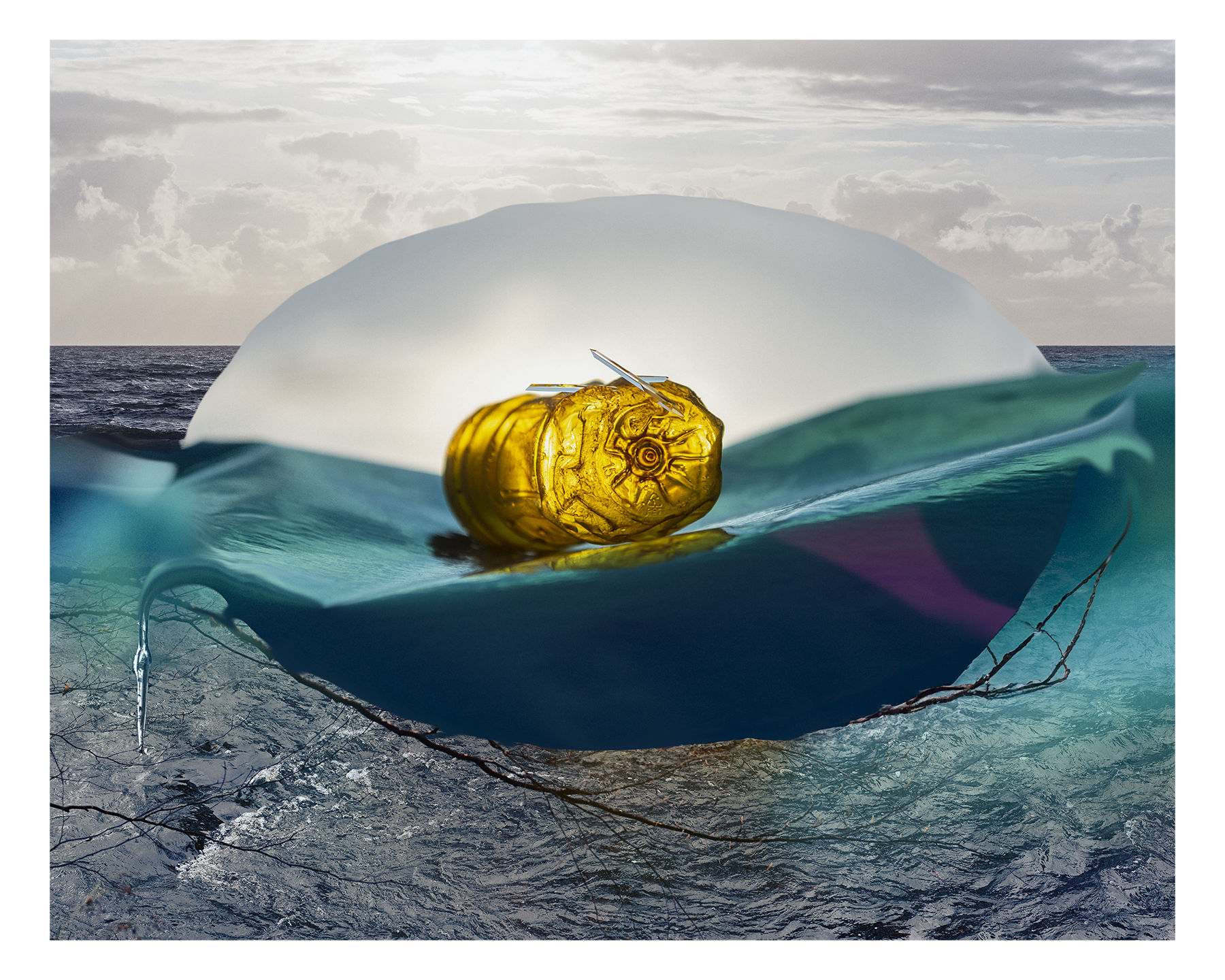
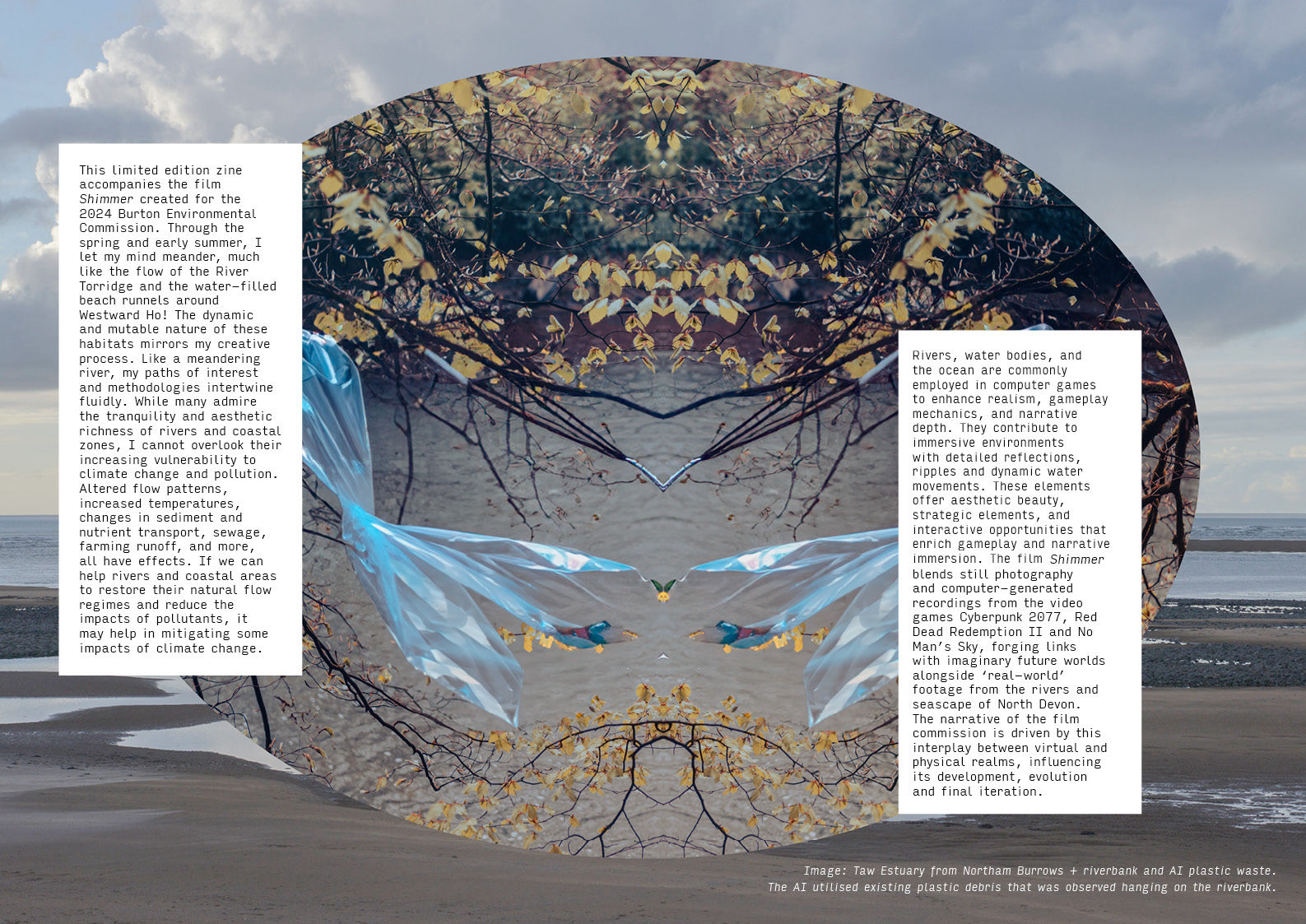
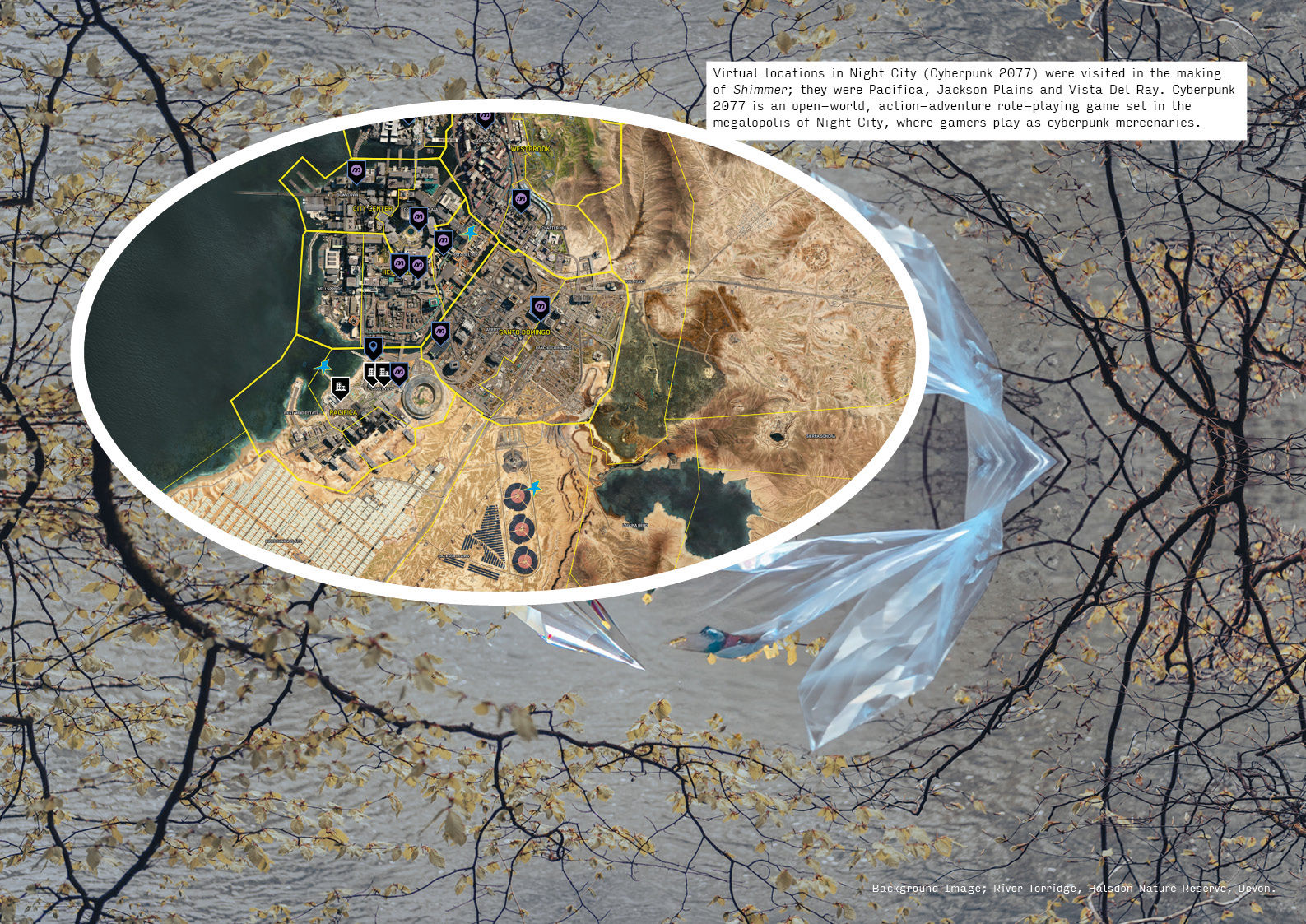
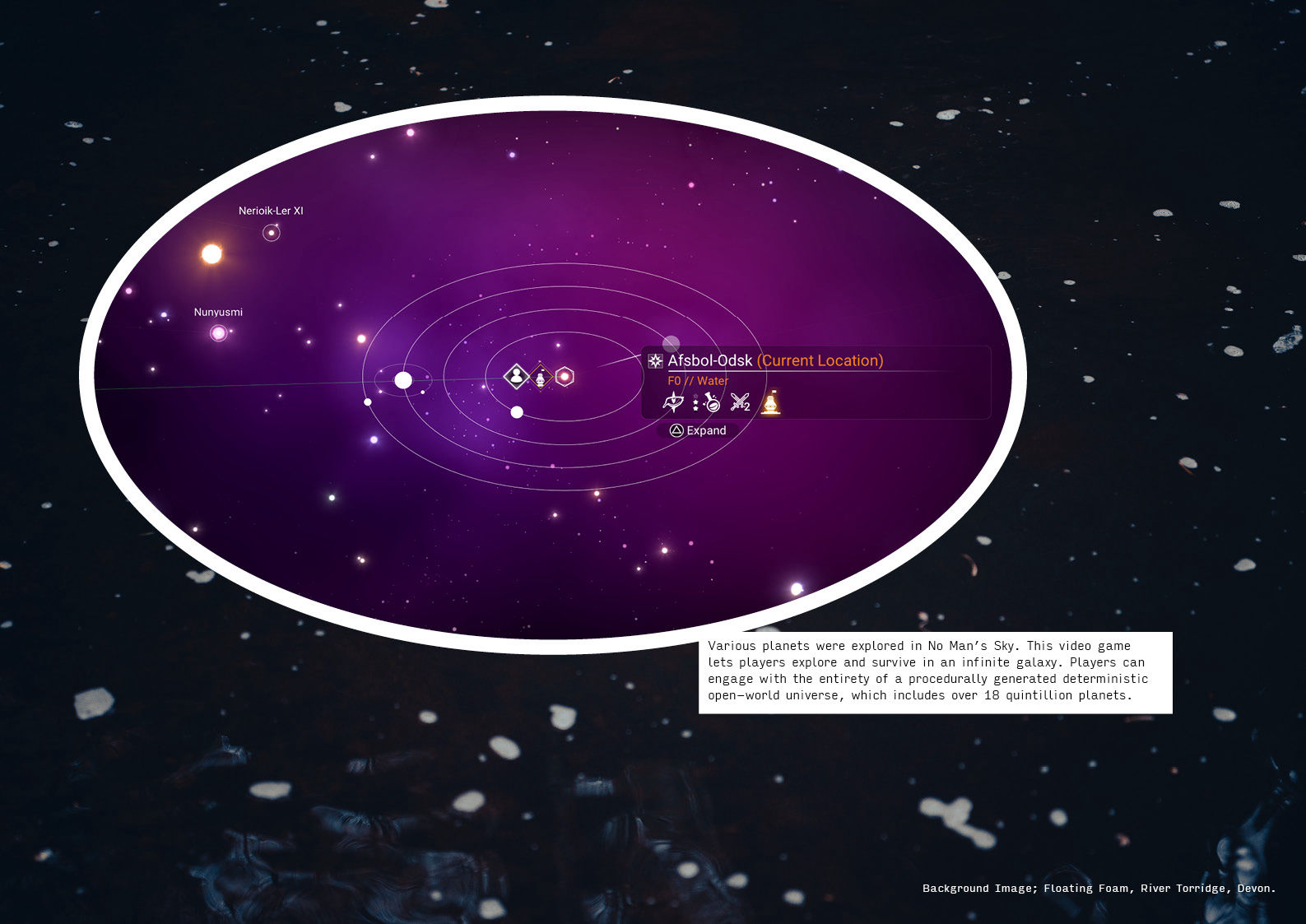
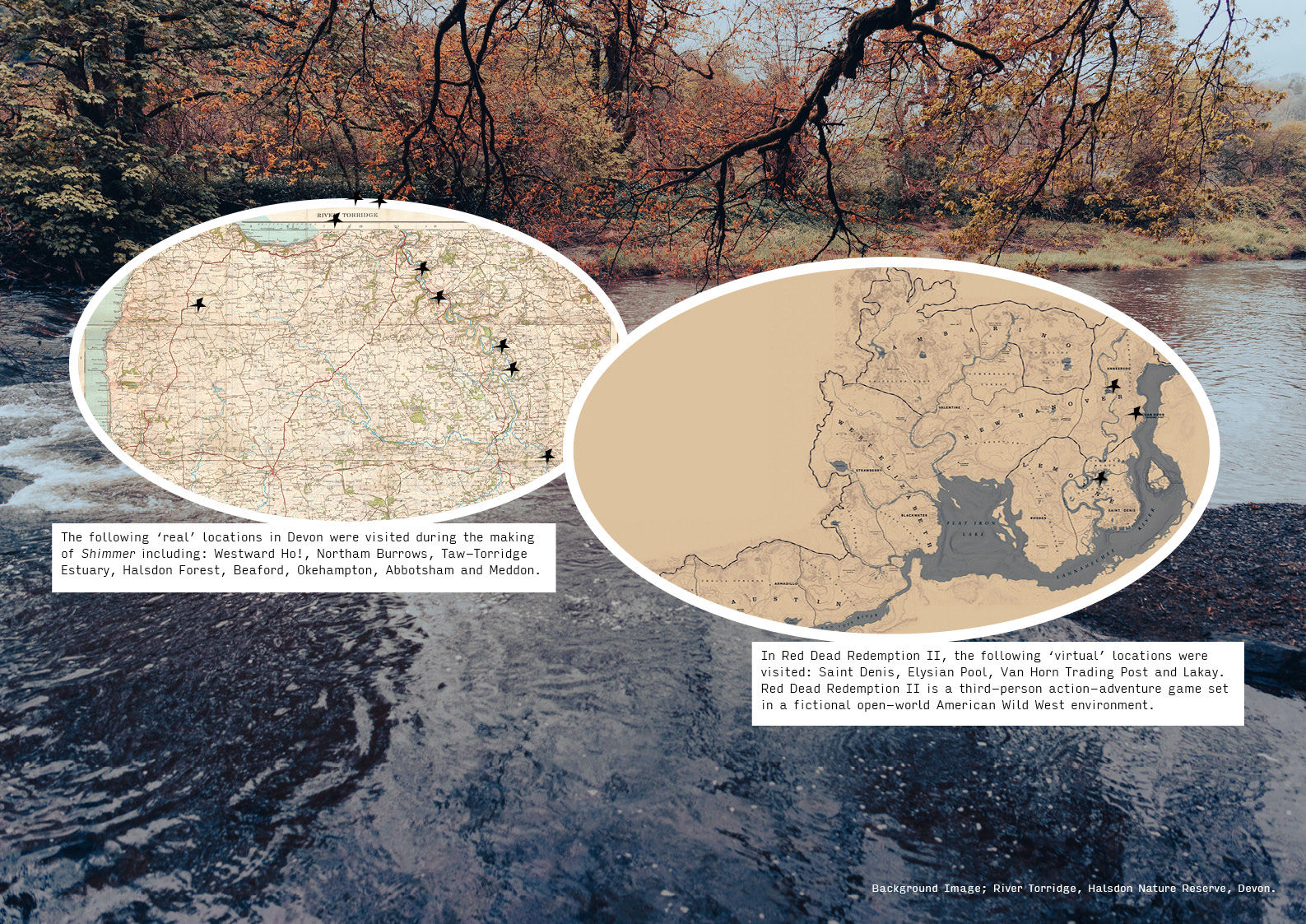
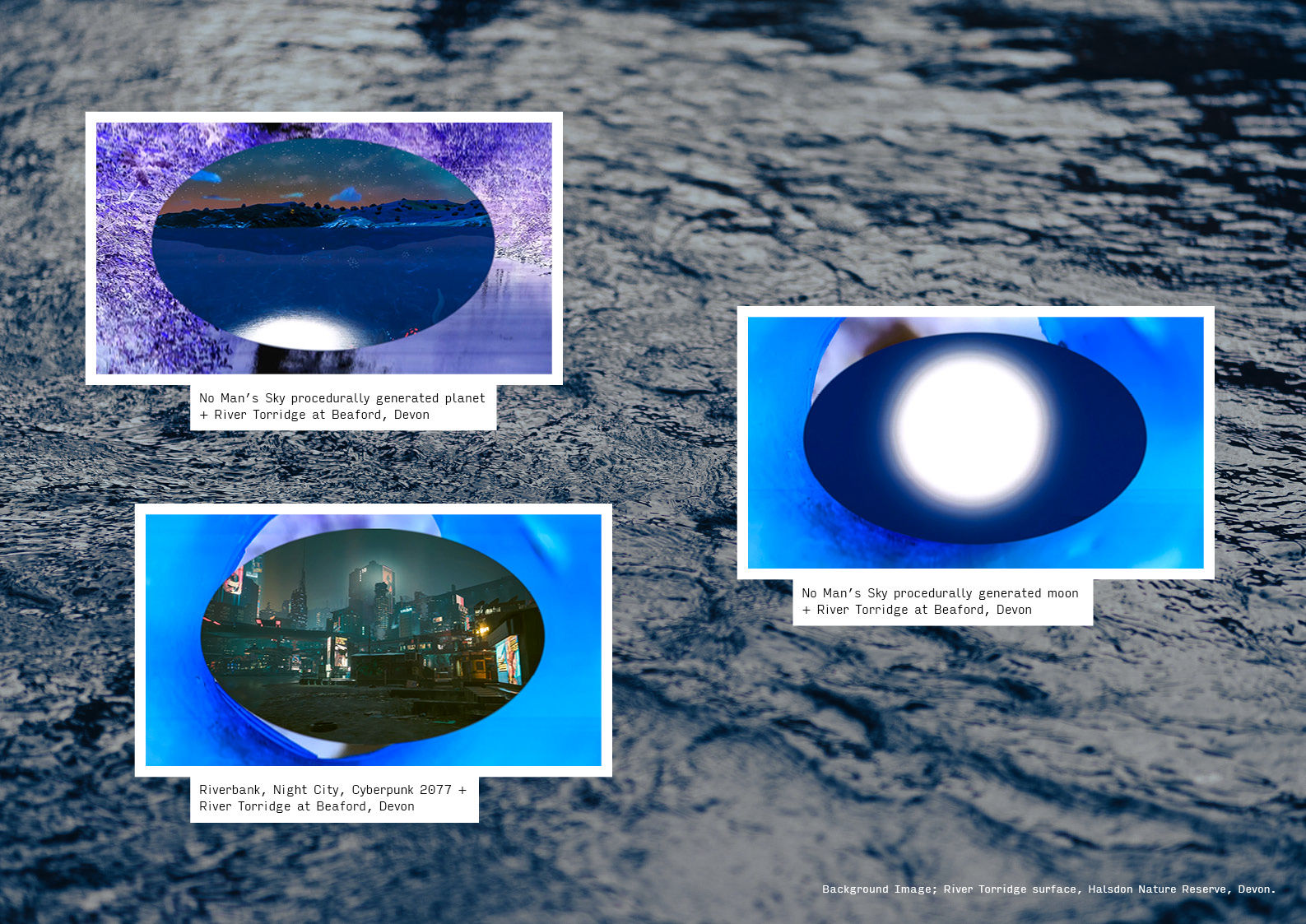
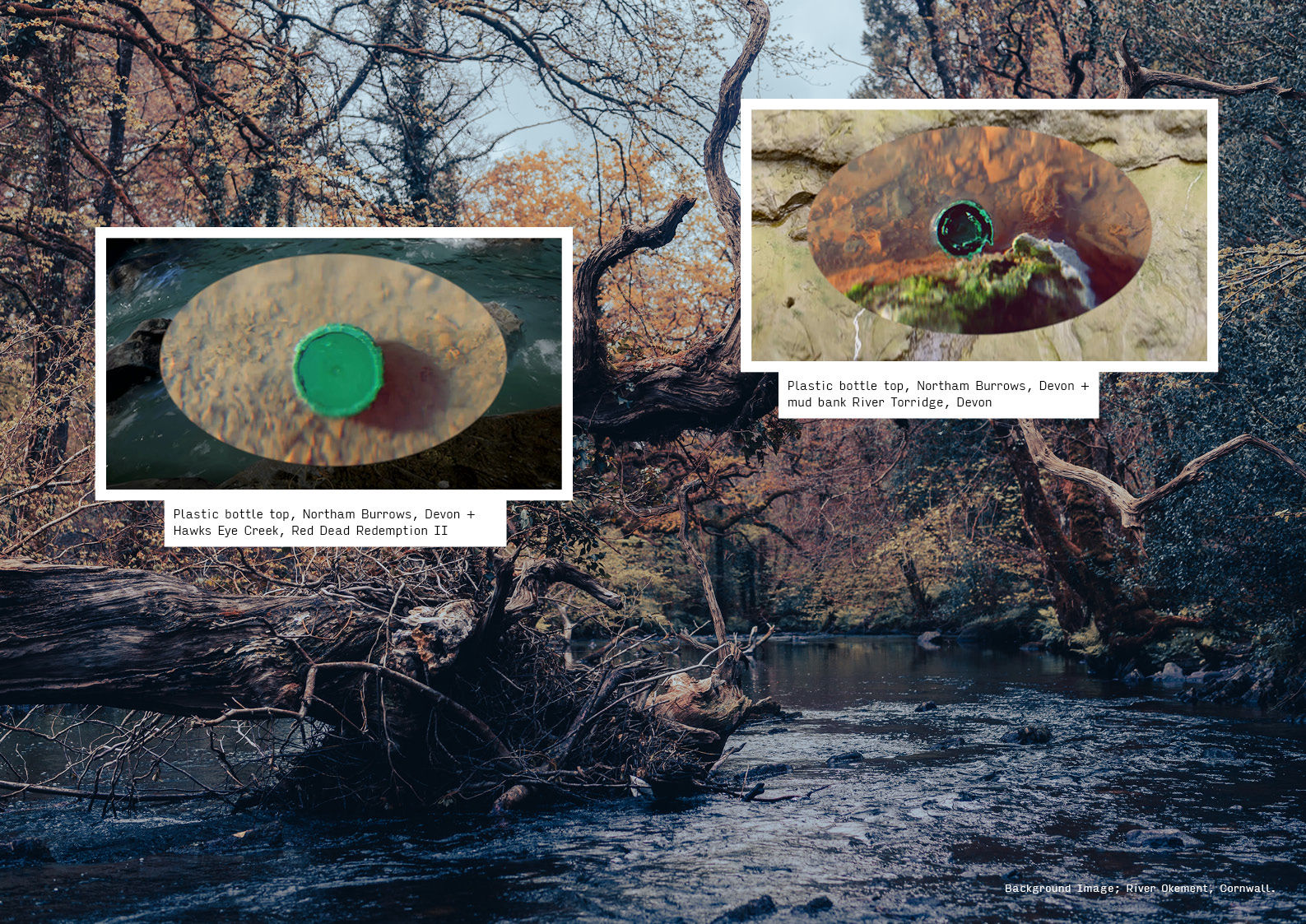
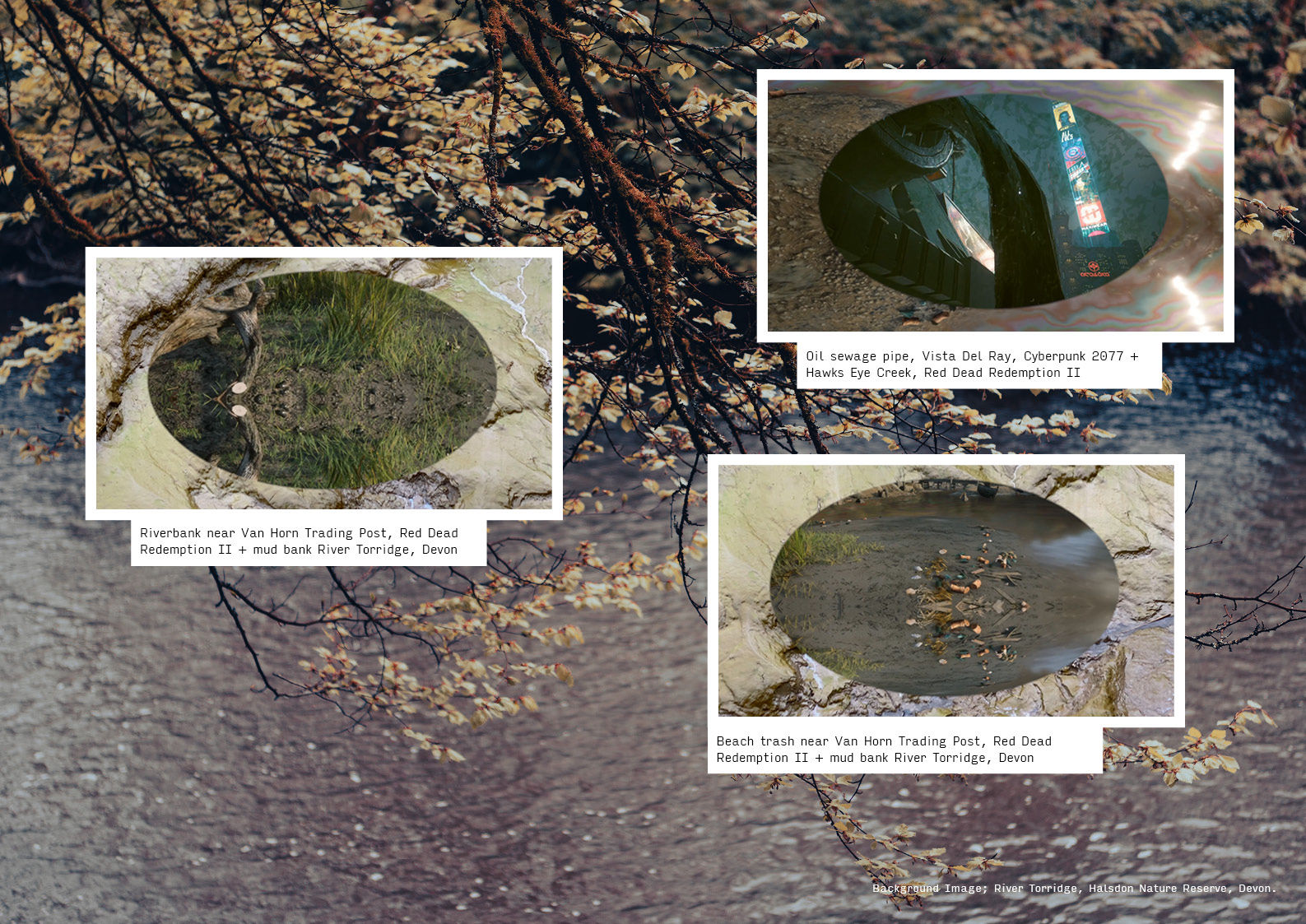
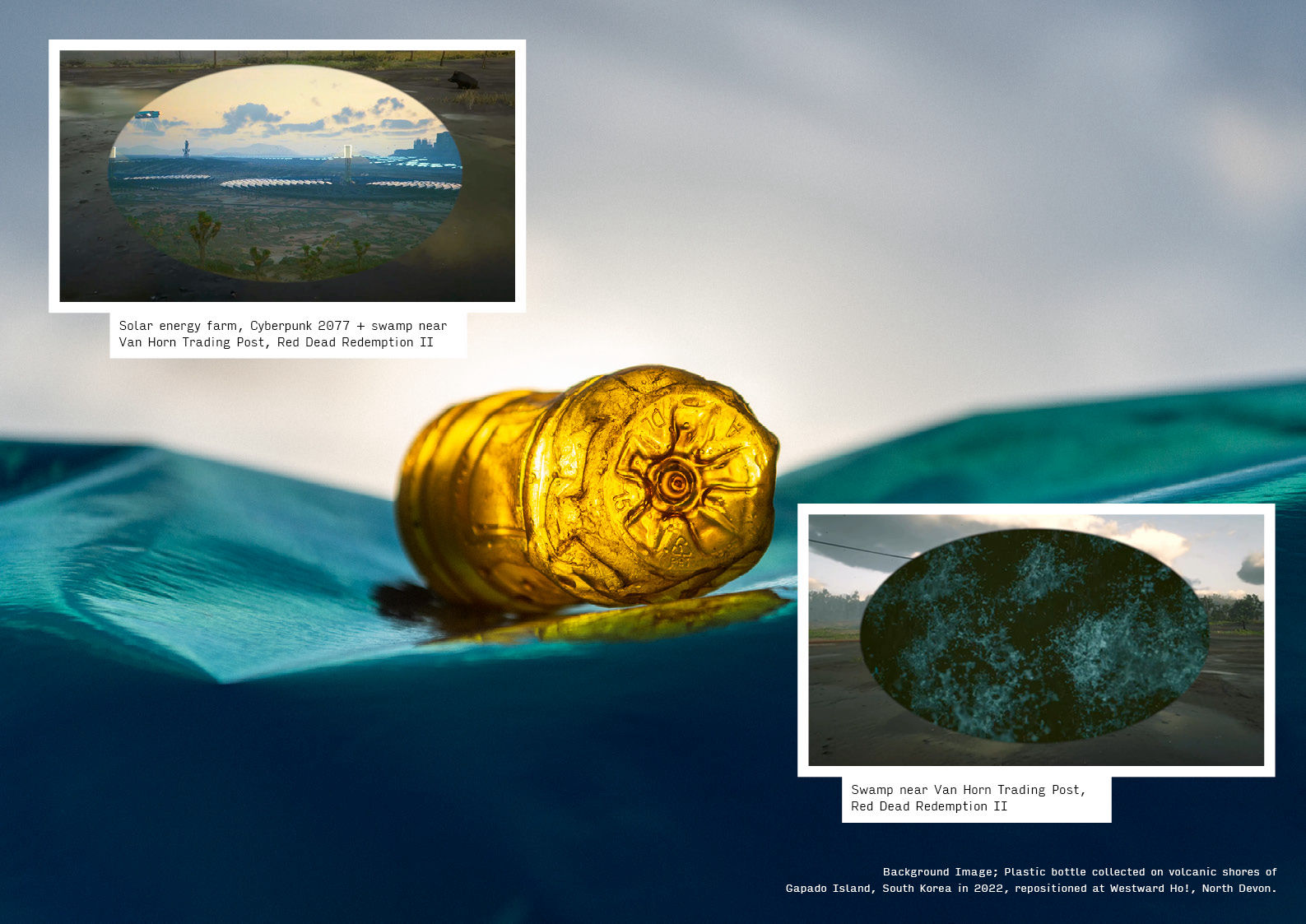
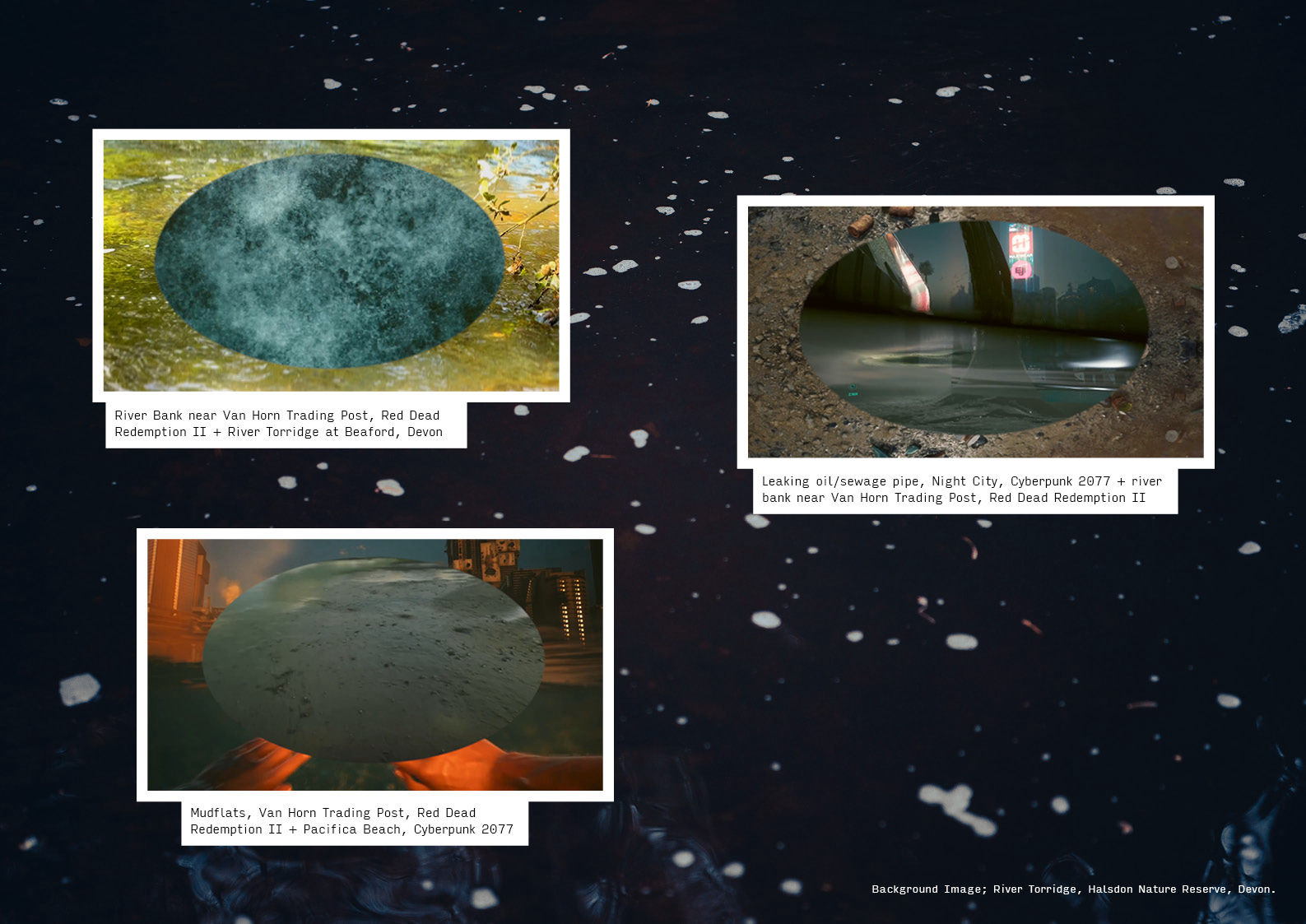
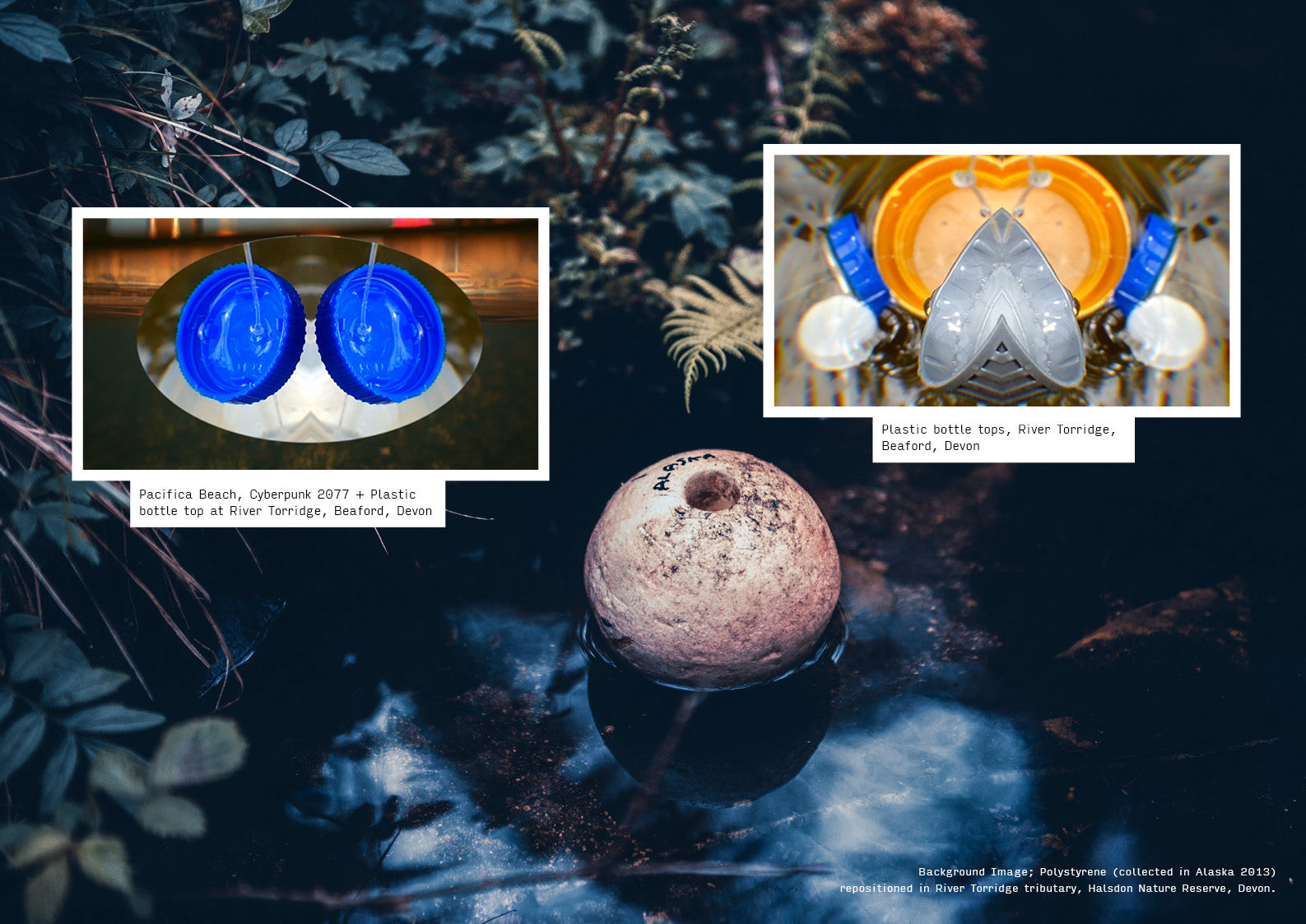
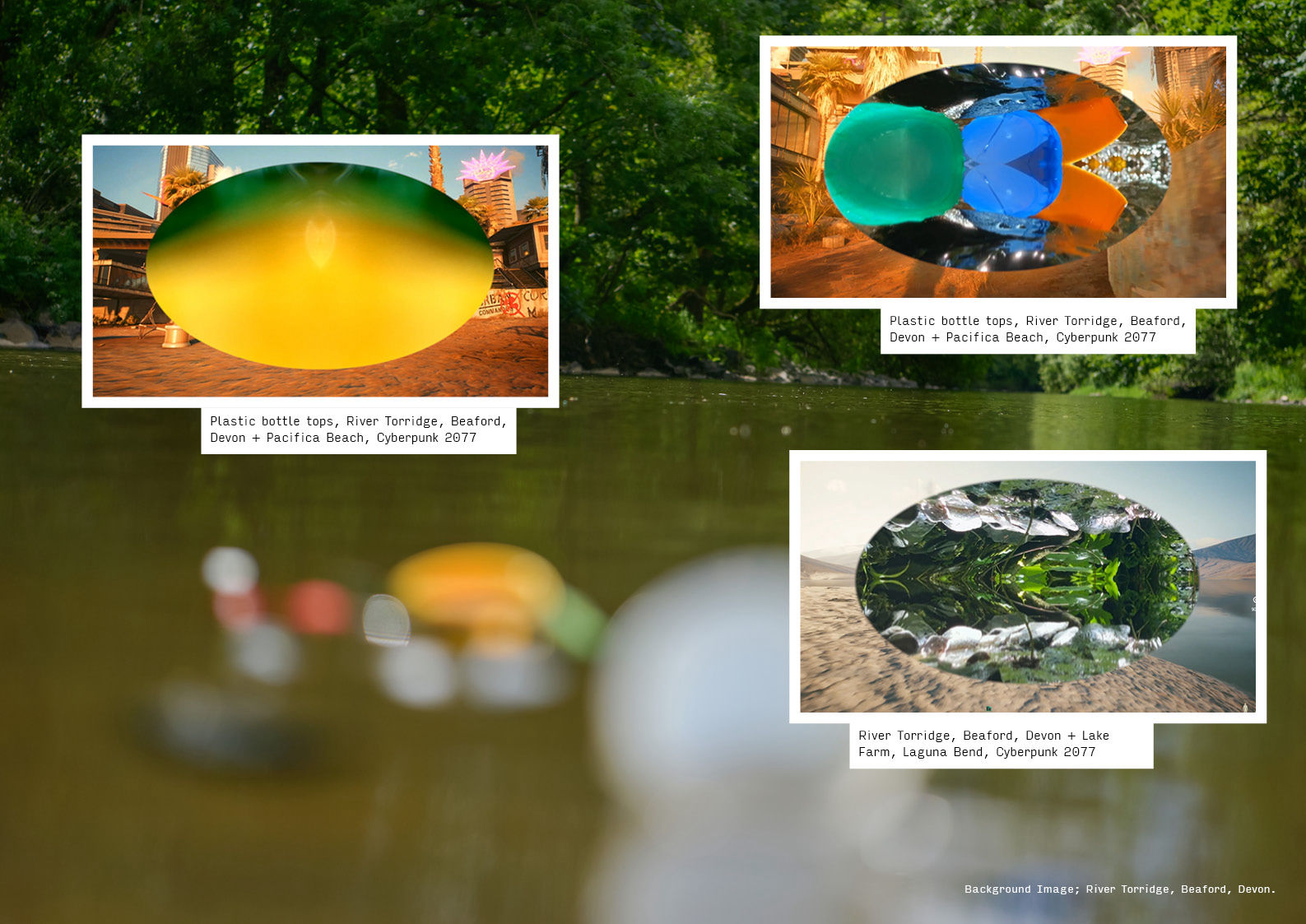
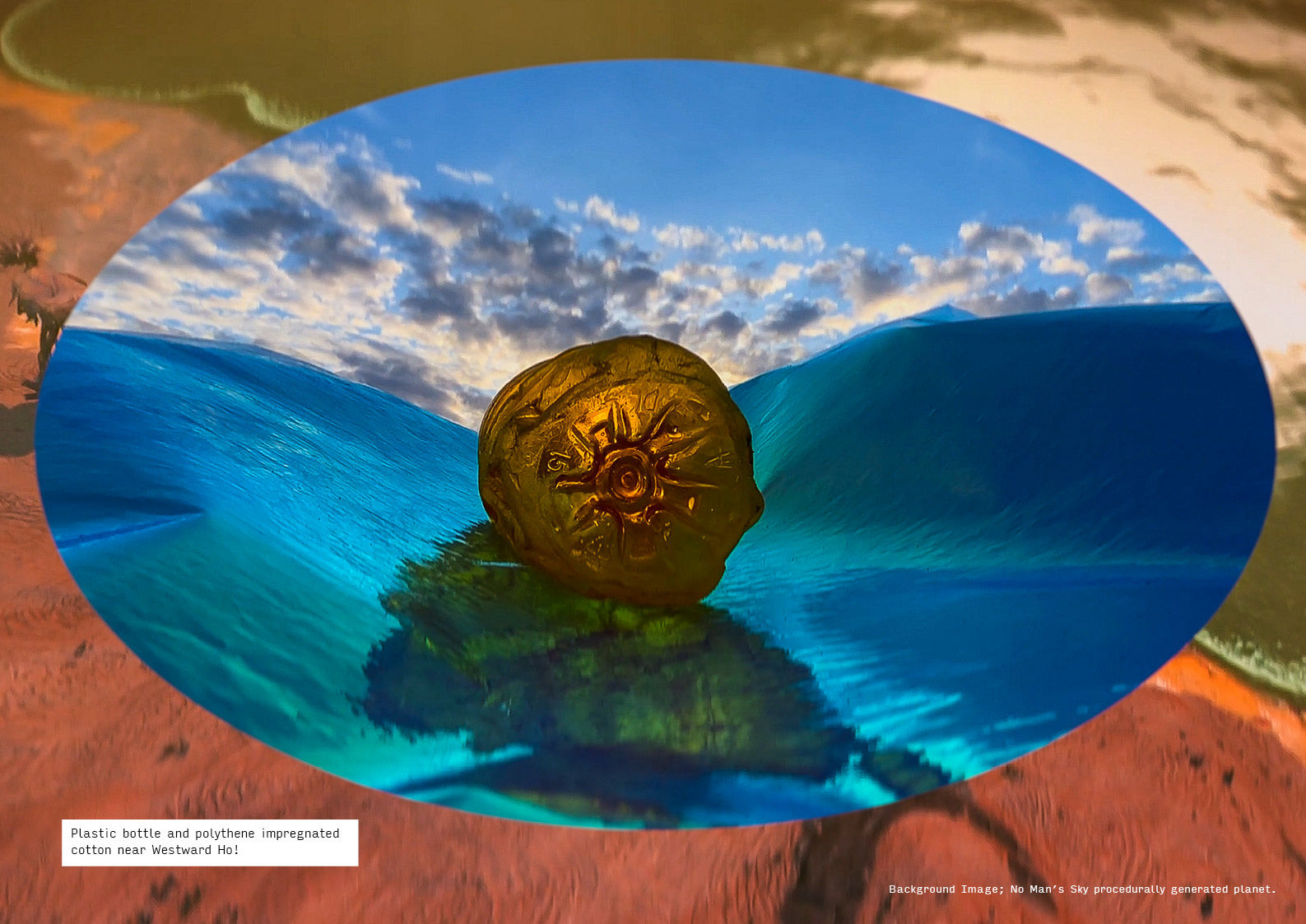
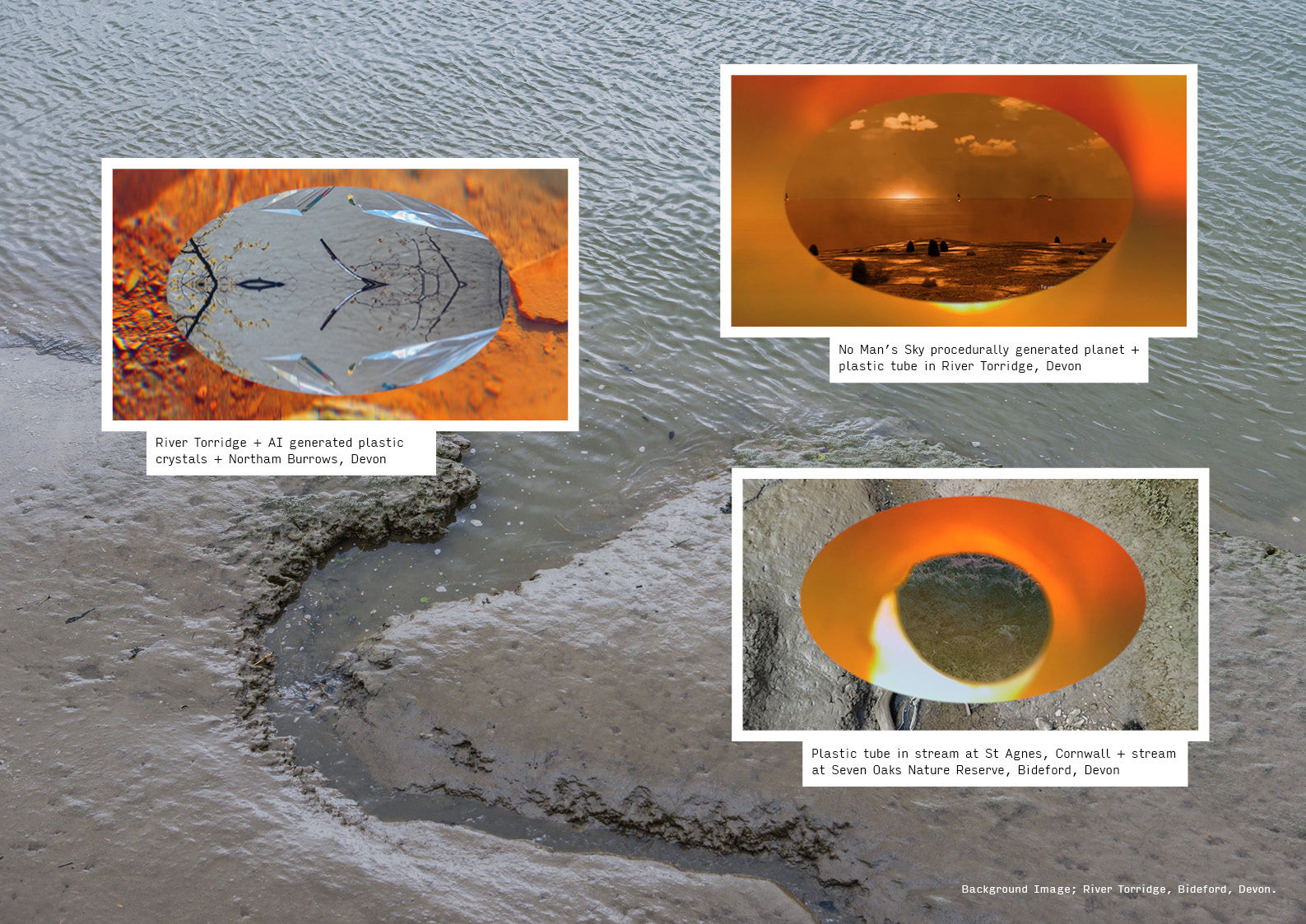
Shimmer was crafted through a unique process blending imagery from internet archives, in-game footage, and real-world material captured along the North Devon coast and the River Torridge. This eclectic mix allowed me to weave together a rich tapestry of visual elements, drawing from both digital and physical realms to create an otherworldly narrative.
Warren: What was the significance of using a fishing line to manipulate collected trash in the river?
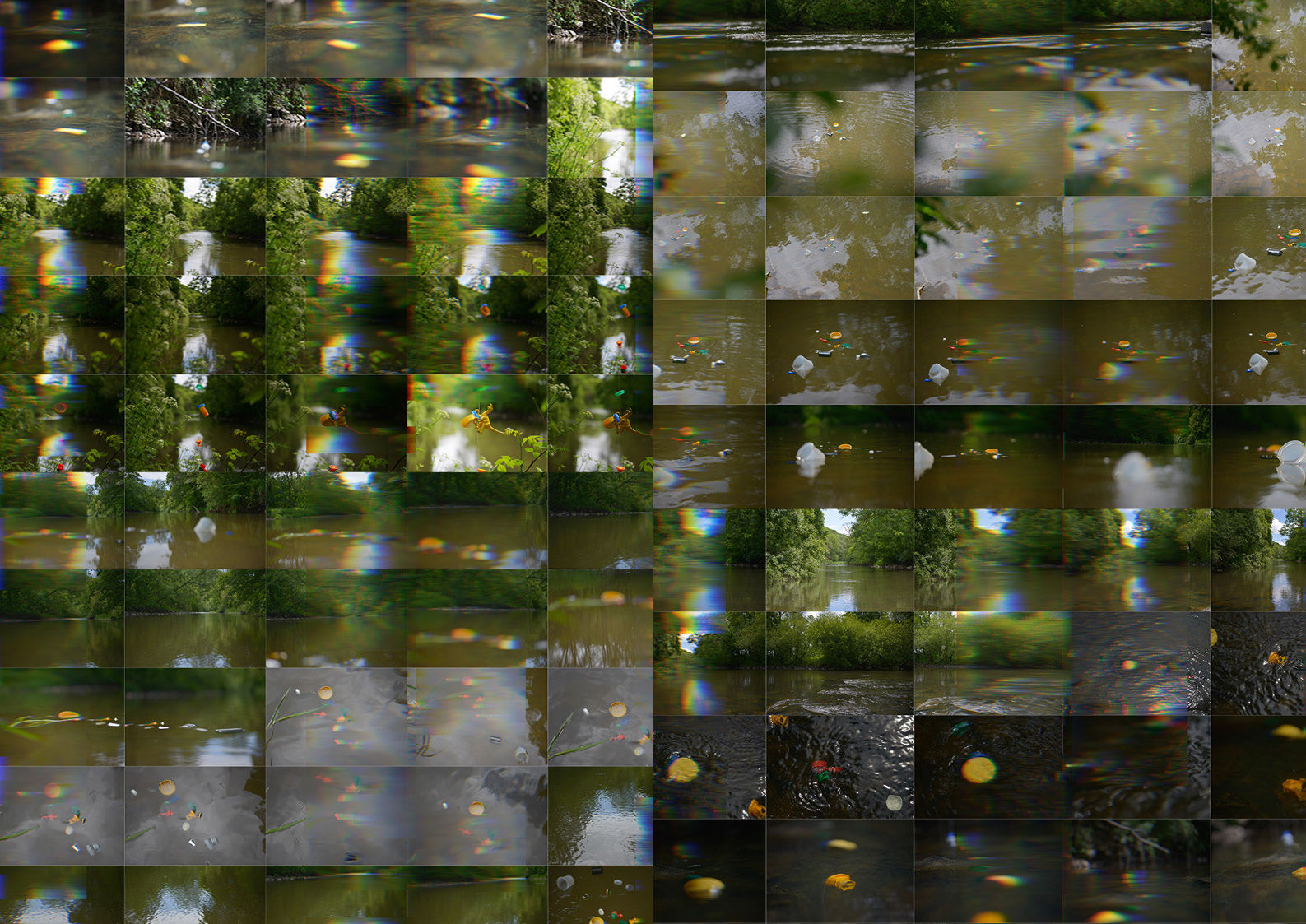
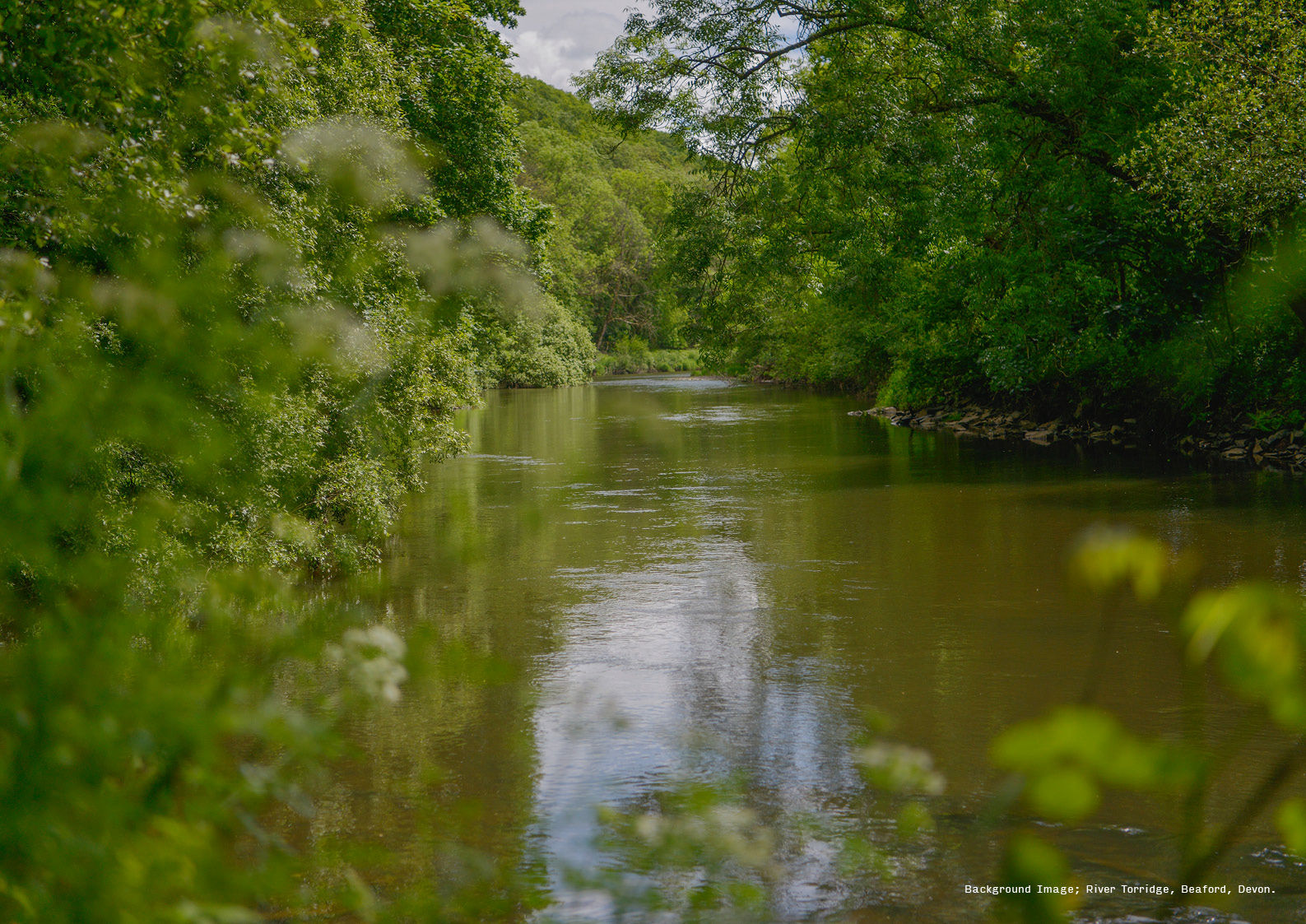
I often think of my work as a type of fishing, where I cast for ideas. For example, on a particularly sunny day in Beaford, I wandered along the riverbanks and discovered small shale formations that provided the perfect setting for a temporary camp. It was an ideal spot for fishing. During the day, I immersed myself in the river up to my waist, using a fishing line to cast various pieces of collected trash into the water. The line served a dual purpose: it kept the objects from drifting away and allowed me to manipulate their movement within the river's current. Through this process (using both still and video capture), I aimed to create a visual narrative that evoked a "plastic dance"—a playful yet transient interaction between the materials and their natural surroundings, highlighting the interplay and tension between human-made and natural worlds.
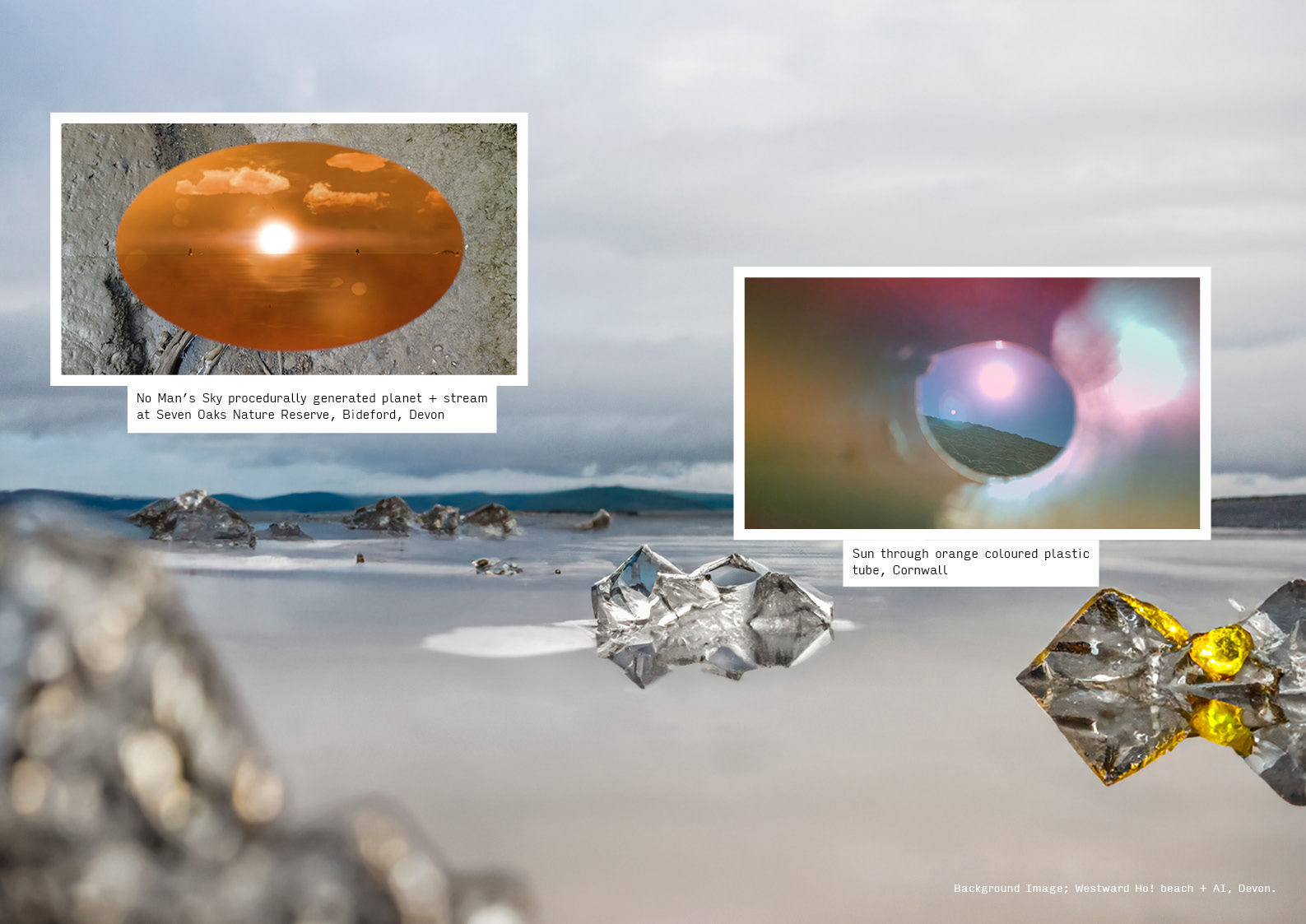
I also remember gazing at the intricate tangle of materials in one of the Torridge’s feeder tributaries. The complexity of the patterns made it difficult to distinguish what was naturally occurring from what had been introduced by human activity. The interplay of these elements created a rich, textured scene where the lines between nature and human-made influences blurred. On another occasion, while kneeling on the shore at Westward Ho!, the sky appeared as a thin, grey band, and the sand was so smooth and reflective that it seemed almost like a mirror. At that moment, I realised I was in a “shimmer zone”—a space where perception only emerges when you’re up close. It’s only when your eyes are just inches from a subject that you can truly appreciate the subtle beauty of things like sand, plastic, and mud. A selection of images from these experiences is included in a limited edition zine publication.
Warren: You mentioned reading Tarka the Otter. What connection did you make between the novel and the River Torridge in your commission?
After completing the commission, I found myself in Tavistock and came across an early edition of Tarka the Otter by Henry Williamson. The book vividly introduces readers to the landscape that serves as Tarka’s home. The river, its banks, and the wildlife are described with a deep sense of connection and detail. The Torridge River, in particular, is depicted as a complex environment that is nurturing yet fraught with danger. Its beauty is intertwined with the inherent perils it presents, reflecting both the splendour and the risks of the natural world.
It is strangely reassuring that the river and coastal duality described by Williamson is, in some way, reflected in my own project, as I sought to mirror the river's intricate balance of beauty and hazard through my own artistic process. The book offers a detailed rendering of an otter's life, written from the otter’s perspective in prose that is both descriptive and poetic. The encounters with humans are often dangerous and painful, culminating in the harrowing description of Tarka’s exhausting and fatal hunt. It is this perspective—seeing the world through the otter’s eyes—that is key. Similarly, in my film, the world is viewed through the lens of a piece of plastic, emphasising the shift in perspective and the deeper implications of our interactions with the environment.